Common Mistakes Retailers Make When Buying Gold Jewelry in Bulk

Common Mistakes Retailers Make When Buying Gold Jewelry in Bulk
Common mistakes retailers make when buying gold jewelry in bulk often begin long before production starts. Retailers frequently face inventory losses, supplier inconsistency, MOQ confusion, delayed deliveries, and quality mismatches because supplier evaluation processes are incomplete or rushed. In Dubai’s competitive jewelry trade environment, these operational issues directly affect margins, stock planning, and repeat customer confidence.
Many retailers compare suppliers primarily through catalogue variety or quoted pricing without evaluating production systems, material verification procedures, or repeat-order consistency. While pricing remains important, long-term wholesale performance depends on reliability, communication accuracy, and manufacturing control. Bulk purchasing requires more than sourcing attractive designs. It requires understanding how a supplier manages production standards across multiple orders and changing inventory requirements.
The following sections explain the most common operational mistakes retailers make when sourcing wholesale gold jewelry in Dubai and how experienced buyers reduce those risks before confirming factory orders.
Mistake 1: Choosing Suppliers Based Only on Price

One of the most common bulk gold jewelry buying mistakes is selecting suppliers based entirely on pricing. Low quotations may appear commercially attractive during initial sourcing discussions, but they often hide operational compromises that become visible later in production.
In wholesale jewelry sourcing, unusually low prices can indicate inconsistent alloy quality, outsourced finishing, unstable subcontracting, or reduced quality inspection procedures. Retailers focusing only on price may overlook hidden variables such as inconsistent clasp durability, uneven polishing, weak soldering, or inaccurate weight tolerances. These issues increase return rates and create inventory complications across retail branches.
Price-driven supplier selection can also create long-term supply instability. Some suppliers quote aggressively to secure first orders and later increase production costs, extend lead times, or substitute materials when gold market prices fluctuate.
Experienced buyers evaluate suppliers using broader operational criteria. These include production capacity, documented quality control systems, manufacturing transparency, hallmark verification procedures, and repeat-order consistency. Retailers should also request production samples from different batches instead of reviewing only showroom pieces prepared specifically for sales presentations.
This becomes even more important when retailers manage seasonal stock forecasting and repeat-order scheduling.
Mistake 2: Ignoring MOQ and Lead Time Requirements
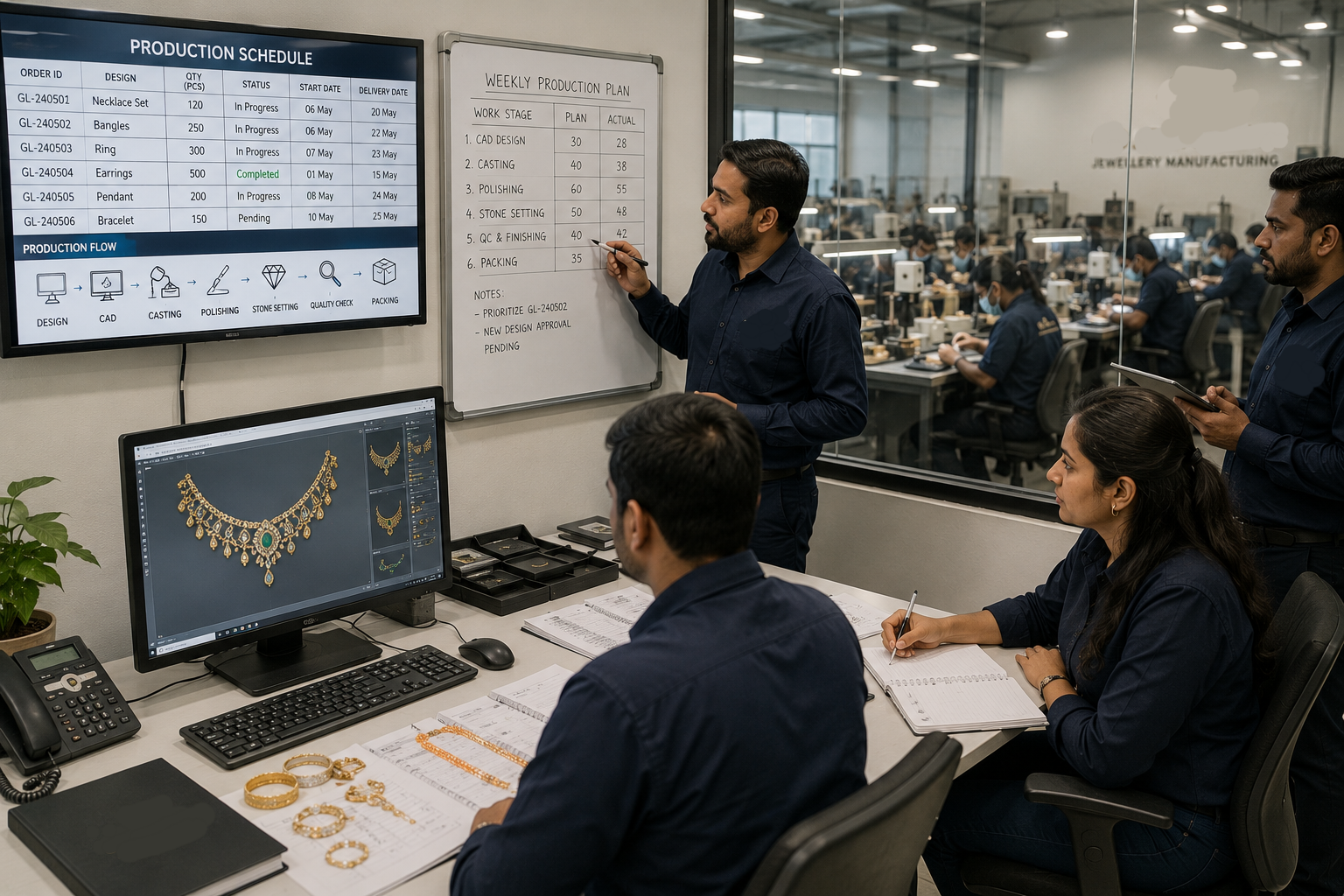
Another major wholesale jewelry sourcing mistake involves misunderstanding minimum order quantity requirements and production lead times. Retailers sometimes confirm orders without fully understanding how factory scheduling affects inventory planning and replenishment cycles.
MOQ, or minimum order quantity, determines the lowest production volume a manufacturer will accept for a specific design, collection, or manufacturing process. Some factories maintain low MOQs for standard catalogue items but require higher quantities for customized molds, exclusive designs, or gemstone settings. Retailers who overlook these distinctions may face unexpected production costs or delayed approvals.
Lead time management is equally important. Gold jewelry manufacturing includes multiple stages such as CAD approval, mold preparation, casting, stone setting, polishing, hallmarking, and final inspection. Production cycles vary according to design complexity, labor allocation, and gold market conditions. Retailers who fail to plan reorder timing correctly often experience stock shortages during high-demand periods.
Retailers relying on urgent replenishment orders may discover that factories prioritize larger scheduled production runs over emergency requests.
Professional suppliers provide realistic timelines supported by production scheduling visibility. They also explain reorder windows, batch sequencing, and manufacturing capacity limitations before confirming bulk agreements. This operational clarity helps retailers reduce inventory gaps and avoid reactive purchasing decisions.
Understanding MOQ structures and production timing creates a stronger foundation for evaluating gold purity standards and manufacturing compliance procedures.
Mistake 3: Not Verifying Gold Purity Standards
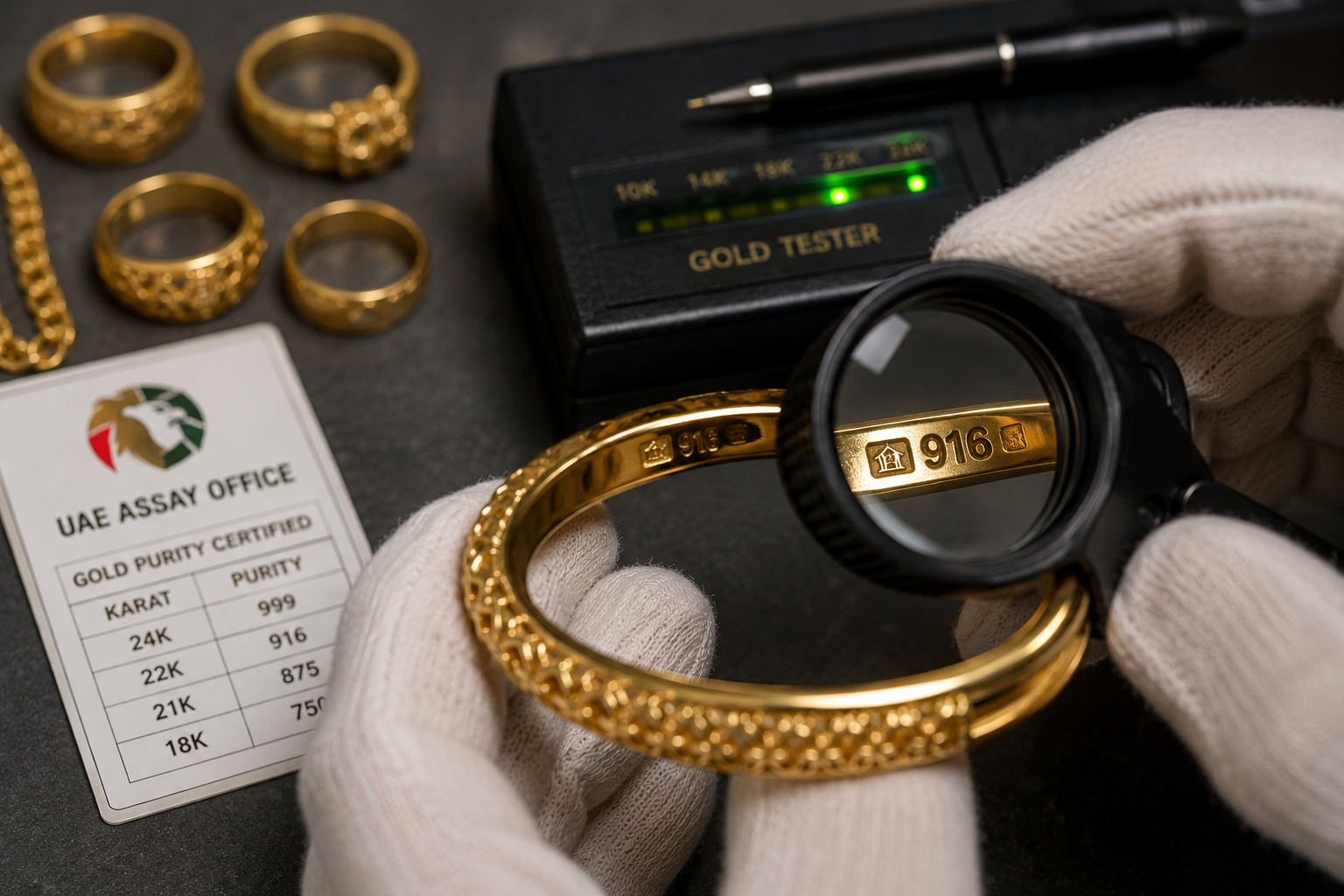
Gold purity verification remains one of the most important parts of wholesale supplier evaluation. Retailers who fail to verify purity standards independently risk compliance problems, pricing disputes, and long-term reputational damage.
Dubai’s jewelry market operates under strict hallmarking and precious metal regulations. UAE hallmarking standards commonly recognize 18K, 21K, 22K, and 24K gold classifications, represented through fineness markings such as 750, 875, 916, and 999. These markings indicate the percentage of pure gold present within the alloy composition.
Retailers should confirm that suppliers provide legally compliant hallmarking alongside documented purity verification procedures. Professional manufacturers normally support purity validation through assay testing, internal laboratory procedures, or external verification documentation.
Karat mismatch issues remain common in international sourcing. Some suppliers market jewelry using simplified descriptions that do not accurately match alloy composition. For example, a retailer ordering 22K jewelry may receive products with inconsistent purity percentages across production batches if alloy preparation controls are weak.
Eighteen-karat gold is frequently used for stone-set jewelry because stronger alloy composition supports detailed settings. Twenty-one-karat and twenty-two-karat gold remain common for traditional Gulf jewelry due to higher gold content and regional demand preferences. Retailers should align product selection with local market expectations rather than purchasing solely on appearance.
The Dubai Central Laboratory and UAE hallmarking framework help support industry consistency through regulated inspection and certification standards.
Purity verification naturally connects to another major sourcing issue: whether suppliers maintain direct production oversight or rely heavily on outsourced manufacturing networks.
Mistake 4: Working with Traders Instead of suppliers that work directly with jewelry manufacturers

Many retailers mistakenly assume all wholesale suppliers manage their own manufacturing operations. In reality, some jewelry traders operate primarily as intermediaries, outsourcing production to multiple workshops without maintaining consistent factory supervision.
This structure creates significant operational risk. When retailers work with non-production-linked suppliers, they often lose visibility into manufacturing processes, batch control systems, and finishing consistency. Orders may be distributed across several subcontractors using different equipment standards, labor skill levels, or alloy preparation methods.
Production visibility is especially important for repeat orders. A retailer may approve an initial sample only to discover noticeable variations in later batches because manufacturing was transferred to another workshop. Common inconsistencies include polish differences, altered dimensions, clasp variations, and uneven stone setting quality.
Outsourcing also complicates communication during production changes. Retailers requesting design modifications or urgent corrections may encounter delays because traders must coordinate separately with external factories. This weakens accountability and increases production uncertainty.
Production-linked suppliers generally provide stronger operational transparency. They can explain casting procedures, finishing controls, quality checkpoints, and production scheduling directly because manufacturing coordination remains integrated within their operations. Retailers also gain clearer visibility into reorder consistency and technical production limitations.
Once supplier structure is understood, retailers must also evaluate whether their chosen product mix aligns with actual market demand.
Mistake 5: Ordering the Wrong Product Mix

Retailers sometimes focus heavily on design appearance while overlooking inventory movement patterns. This leads to another frequent bulk jewelry supplier mistake: ordering the wrong product mix for the target market.
Wholesale purchasing decisions should reflect regional demand behavior, customer purchasing frequency, and inventory turnover speed. Heavy traditional pieces may attract showroom attention but move slowly compared with lightweight daily-wear collections. Retailers who overinvest in slow-moving stock often reduce available cash flow for replenishment inventory.
Dubai’s gold jewelry market serves multiple customer categories, including tourists, local Gulf buyers, expatriate professionals, and occasion-based shoppers. Product demand differs substantially between these groups. Tourist-focused collections may prioritize lightweight, gift-oriented items, while local demand may favor higher-karat traditional jewelry with stronger gold weight perception.
Daily-wear collections usually generate more consistent inventory turnover because they support repeat purchasing behavior across broader customer segments. Retailers should therefore balance statement pieces with commercially stable core inventory.
Suppliers with wholesale experience can often provide guidance regarding fast-moving categories, regional preferences, and reorder frequency patterns.
Retailers who evaluate demand patterns carefully reduce inventory stagnation and improve purchasing efficiency. However, selecting the correct product categories alone is insufficient if production quality varies between batches.
Mistake 6: Failing to Check Production Consistency
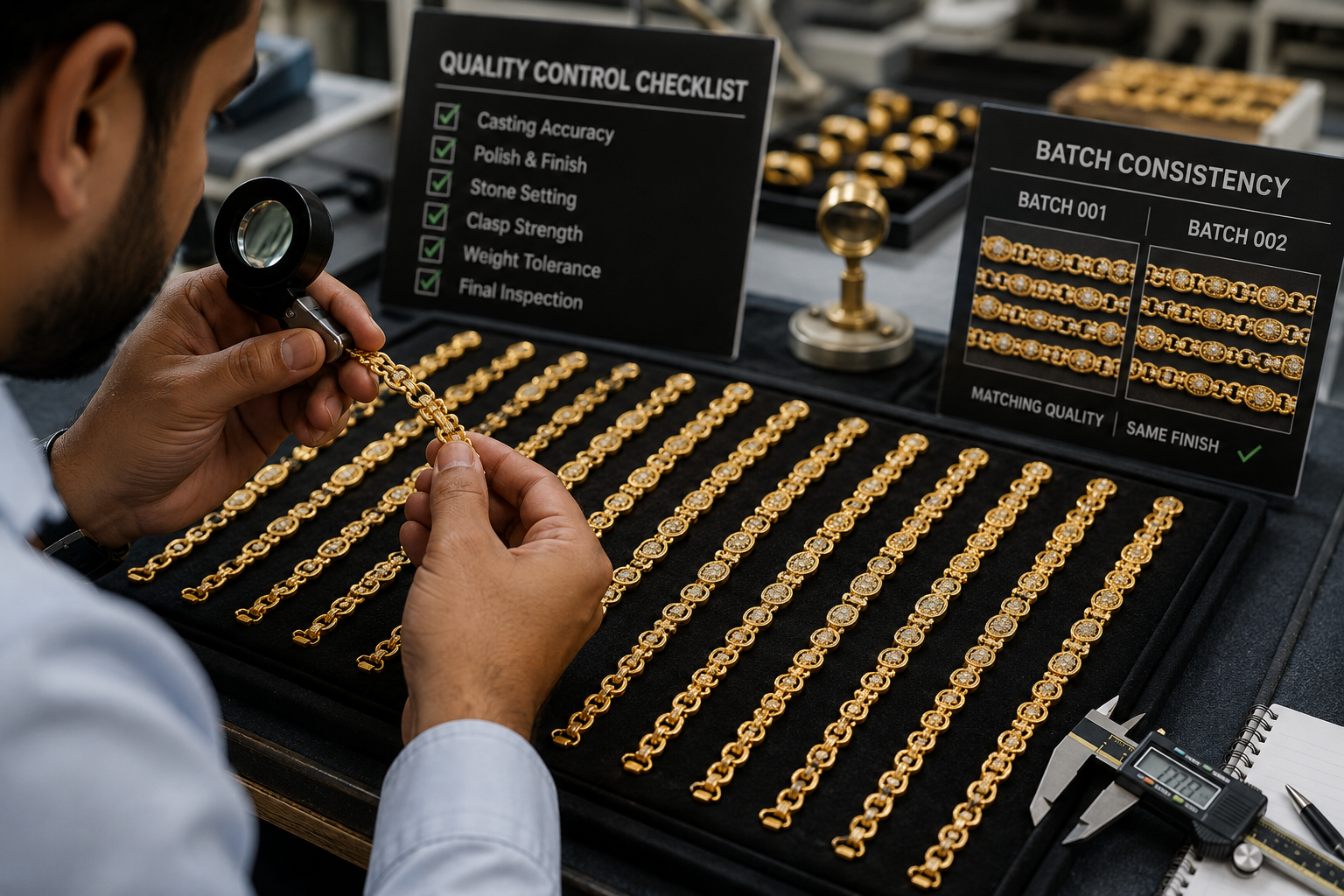
Production consistency directly affects retail credibility, especially when managing repeat customers or multi-branch inventory. Yet many retailers inspect only initial samples and fail to evaluate how consistently suppliers reproduce products across future orders.
Inconsistent finishing remains one of the most common quality control problems in wholesale jewelry manufacturing. Variations in polishing, rhodium application, soldering, or edge finishing may appear minor individually but create visible inconsistency when displayed together in retail environments.
Stone setting variation presents another operational concern. Weak setting alignment, uneven spacing, or inconsistent stone matching can increase repair requests and reduce customer confidence in product quality. These issues often emerge when suppliers outsource portions of production without maintaining unified inspection standards.
Repeat-order mismatch creates additional inventory complications. Retailers may reorder a successful design expecting identical dimensions, color tone, or finishing quality, only to receive visibly different products. This disrupts merchandising consistency and complicates stock replacement procedures.
Professional manufacturers normally implement structured quality checkpoints covering casting accuracy, polishing standards, weight tolerances, stone setting inspection, and final visual assessment before dispatch. Retailers should request information about these procedures rather than relying solely on catalogue presentations.
Consistent production quality depends heavily on accurate communication and documentation throughout the ordering process.
Mistake 7: No Clear Communication or Documentation
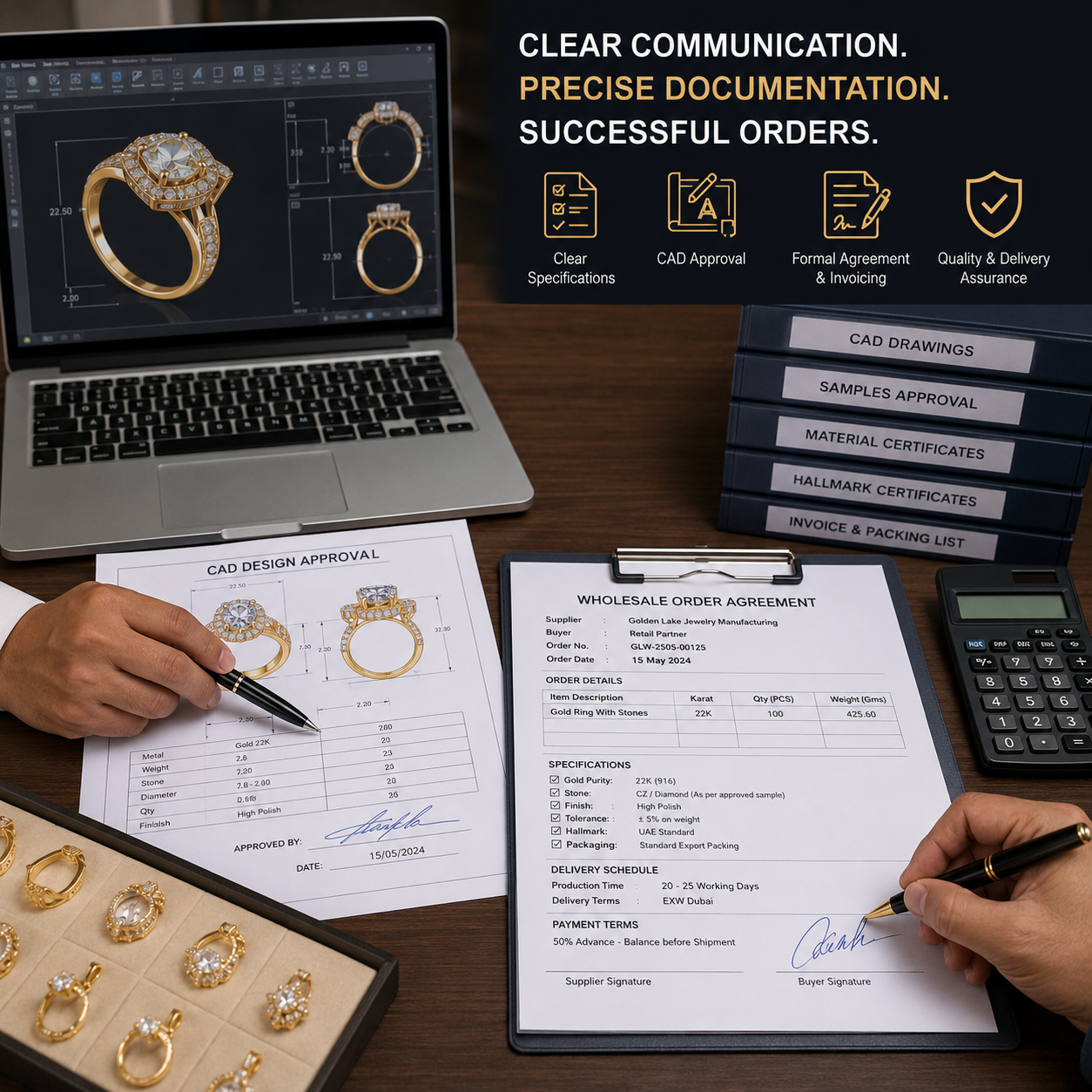
Poor communication creates avoidable production disputes in wholesale gold jewelry sourcing. Retailers sometimes confirm orders through informal messaging without maintaining detailed production documentation, leaving critical specifications open to interpretation.
Professional wholesale agreements should clearly define gold purity, product dimensions, weight tolerances, stone specifications, finishing requirements, delivery schedules, and packaging expectations. Without written confirmation, misunderstandings become difficult to resolve once production begins.
CAD approval procedures are especially important for customized manufacturing. Retailers should review technical drawings carefully before authorizing mold production. Minor overlooked details can significantly affect final product weight, proportions, or wear ability.
Invoice clarity also supports operational protection. Wholesale invoices should specify karat level, item quantity, agreed labor charges, production timelines, and shipping responsibilities. Vague documentation increases the likelihood of disputes regarding pricing adjustments or production changes.
Reliable suppliers usually operate through structured approval systems rather than informal verbal arrangements. Clear documentation protects both parties and reduces operational confusion during production scaling.
These operational safeguards ultimately support a broader strategy focused on reducing wholesale purchasing risk across long-term supplier relationships.
How Smart Retailers Reduce Bulk Buying Risks
Experienced retailers reduce sourcing risk by treating supplier evaluation as an operational process rather than a price negotiation exercise. They compare suppliers using measurable standards including production visibility, purity verification, repeat-order consistency, lead time reliability, and documentation quality.
Smart buyers also conduct phased supplier testing before committing to large inventory allocations. Small initial orders allow retailers to evaluate communication responsiveness, finishing consistency, and delivery accuracy under real production conditions.
Supplier relationships become more stable when expectations remain clearly documented from the beginning. Retailers should establish reorder procedures, approval structures, inspection standards, and escalation contacts before scaling purchasing volumes.
Retailers planning long-term wholesale sourcing should work with suppliers that provide transparent communication, stable production quality, and structured wholesale support across repeat orders.
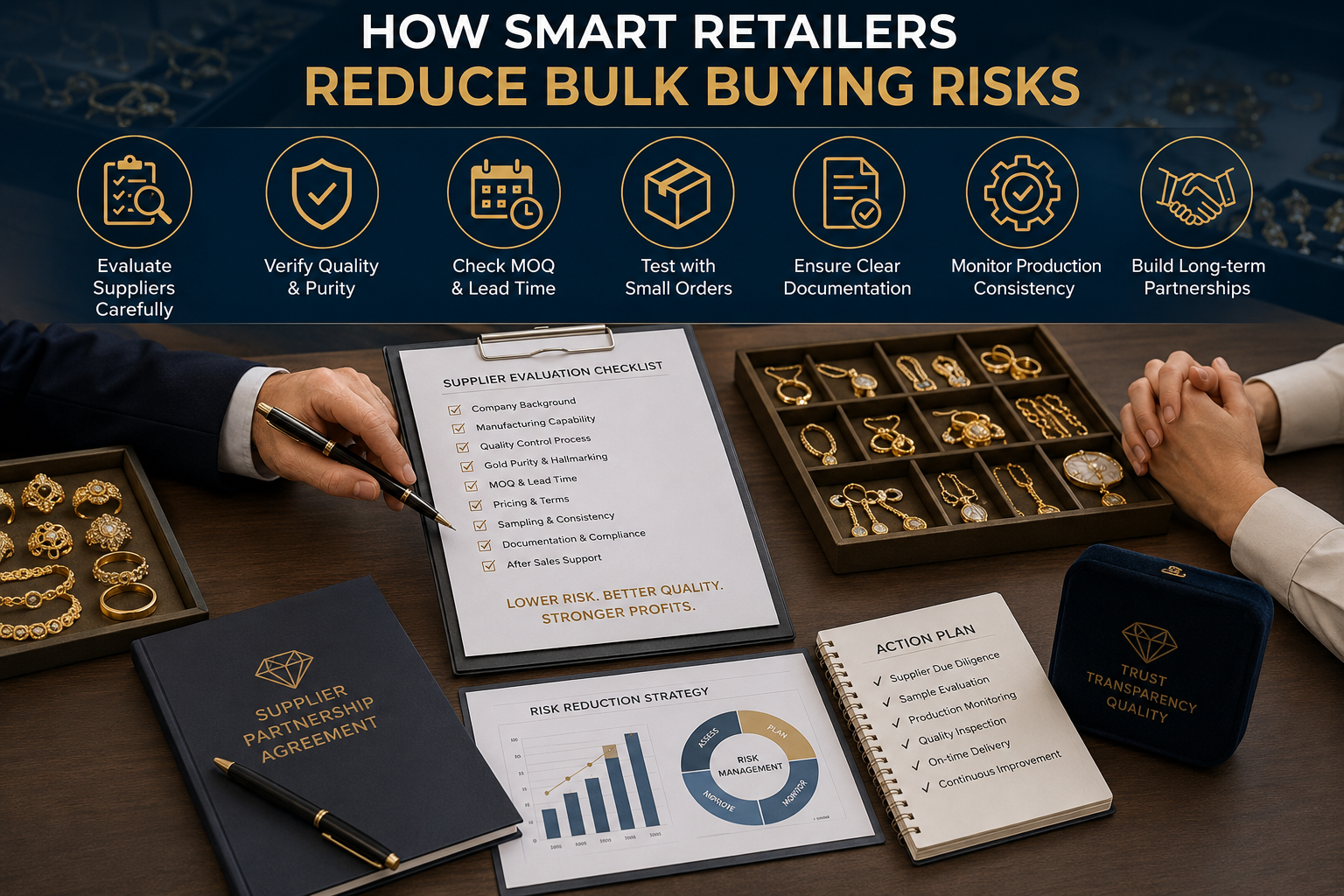
Golden Lake supports retailers through production-linked sourcing processes focused on quality control visibility, documented manufacturing standards, and repeat-order consistency across wholesale jewelry collections in Dubai.
Conclusion
Wholesale gold jewelry sourcing involves far more than comparing prices or reviewing catalogues. Retailers who ignore operational factors such as MOQ structures, purity verification, production visibility, inventory planning, and quality consistency expose themselves to avoidable financial and inventory risks.
The most reliable wholesale relationships are built on transparency, structured communication, and measurable manufacturing standards. Retailers that evaluate suppliers carefully before confirming production agreements are better positioned to maintain inventory consistency, reduce return rates, and support long-term retail stability.
For retailers comparing wholesale suppliers in Dubai, operational discipline remains one of the strongest protections against sourcing inconsistency. Careful supplier evaluation today reduces inventory complications and quality disputes across future production cycles.