How International Buyers Can Place Bulk Orders with Dubai Gold Factories
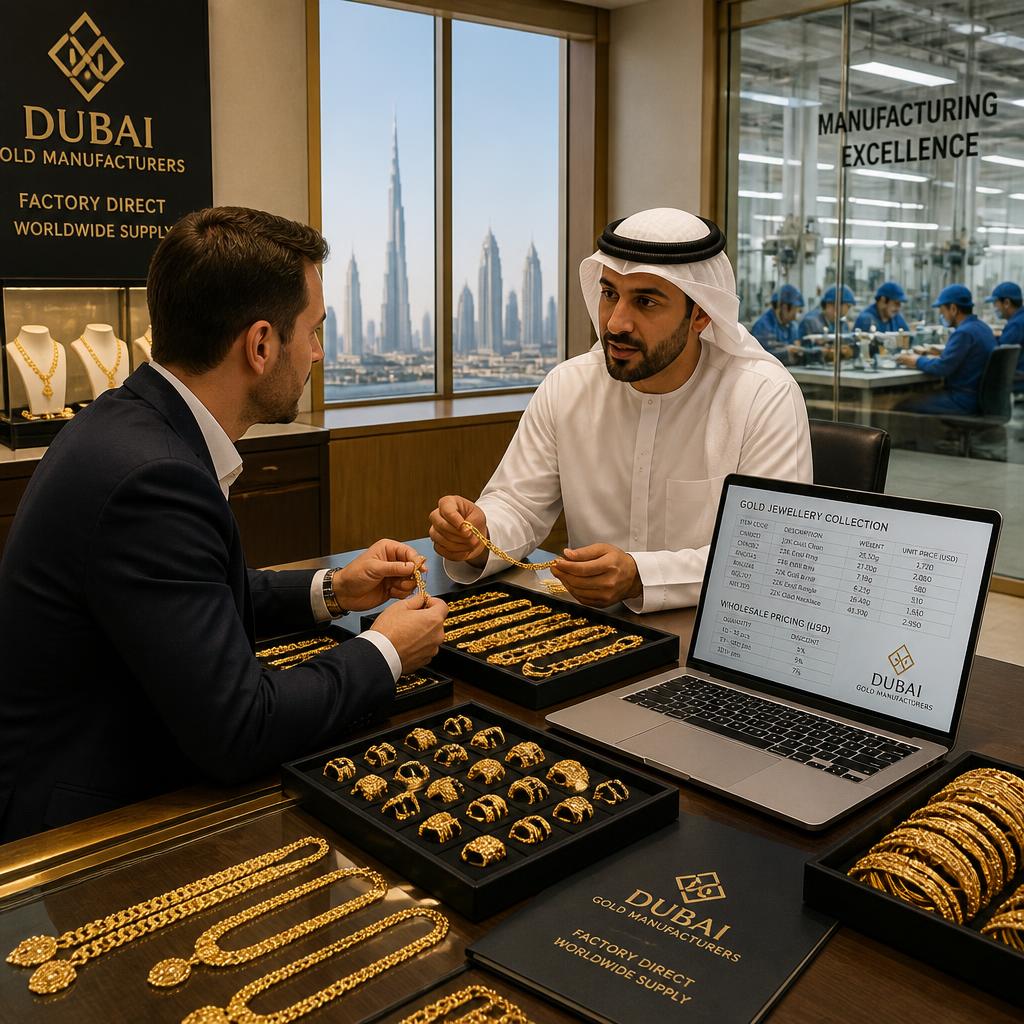
International jewellery retailers are increasingly looking beyond traditional wholesale channels and building direct relationships with manufacturers. Among the world's most established jewellery production hubs, Dubai continues to attract buyers seeking competitive pricing, reliable production, and international export expertise.
For retailers, distributors, chain stores, e-commerce brands, and jewellery importers, understanding the process of placing bulk orders with Dubai gold factories can significantly improve sourcing efficiency and long-term profitability. From selecting products and understanding minimum order quantities (MOQs) to managing production schedules and export documentation, each stage plays an important role in ensuring a successful transaction.
Dubai's gold industry has developed a strong reputation through its extensive manufacturing ecosystem, access to international markets, advanced production facilities, and well-established export infrastructure. As a result, many businesses choose to buy gold jewellery from Dubai factory partners rather than relying solely on intermediaries.
This guide explains how international buyers can successfully source gold jewellery, manage factory relationships, and navigate the complete ordering process when working directly with a gold jewellery manufacturer Dubai businesses trust for wholesale production.
Why International Buyers Work Directly with Dubai Gold Factories
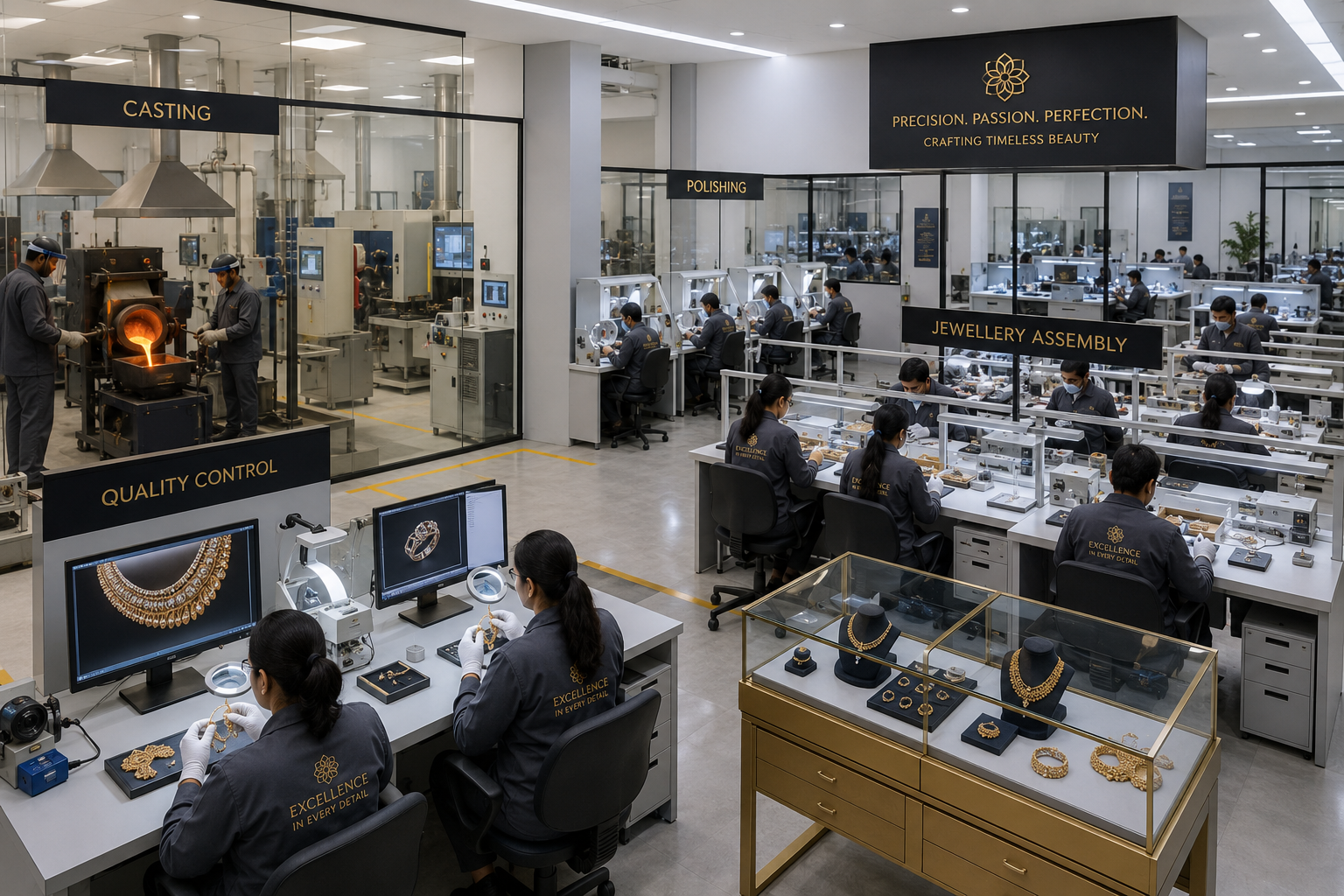
Working directly with manufacturers offers advantages that often extend beyond pricing alone. Buyers gain greater visibility into production, more control over quality standards, and access to custom manufacturing solutions that may not be available through wholesalers.
Lower Cost Structure
One of the primary reasons buyers work directly with factories is cost efficiency.
When retailers source through multiple intermediaries, additional margins are added at every stage of the supply chain. By purchasing directly from a manufacturer, buyers can often eliminate these extra mark-ups and gain access to factory-level pricing.
Additional cost advantages may include:
- More competitive pricing on large-volume orders
- Improved profit margins
- Better negotiation opportunities
- Direct access to production-based costing
- Reduced dependency on third-party distributors
This cost structure is particularly valuable for retailers placing recurring wholesale orders throughout the year.
Greater Production Visibility
Direct factory relationships provide transparency that wholesalers may not always offer.
Inside a Gold Jewelry Factory in Dubai | Manufacturing Process Explained for Retailers
Buyers can gain visibility into:
- Manufacturing schedules
- Production stages
- Material sourcing
- Gold purity standards
- Delivery timelines
This visibility helps businesses plan inventory more effectively and reduce uncertainty throughout the procurement process.
Better Quality Control
Quality consistency is critical in the jewellery industry.
Working directly with manufacturers allows buyers to establish clear specifications and quality expectations before production begins. Reputable factories typically implement inspection procedures throughout the manufacturing cycle to ensure consistency across entire batches.
This level of oversight becomes increasingly important as order volumes grow.
Access to Custom Manufacturing
Many international retailers seek exclusive products that distinguish them from competitors.
Factory-direct relationships often provide access to:
- Custom designs
- Private label production
- Exclusive collections
- Branded packaging
- Market-specific product development
Custom manufacturing enables retailers to create stronger brand identities while offering products that cannot easily be replicated by competitors.
Before approaching manufacturers, however, buyers should first establish a clear understanding of exactly what products they intend to source.
Step 1: Define Product Requirements
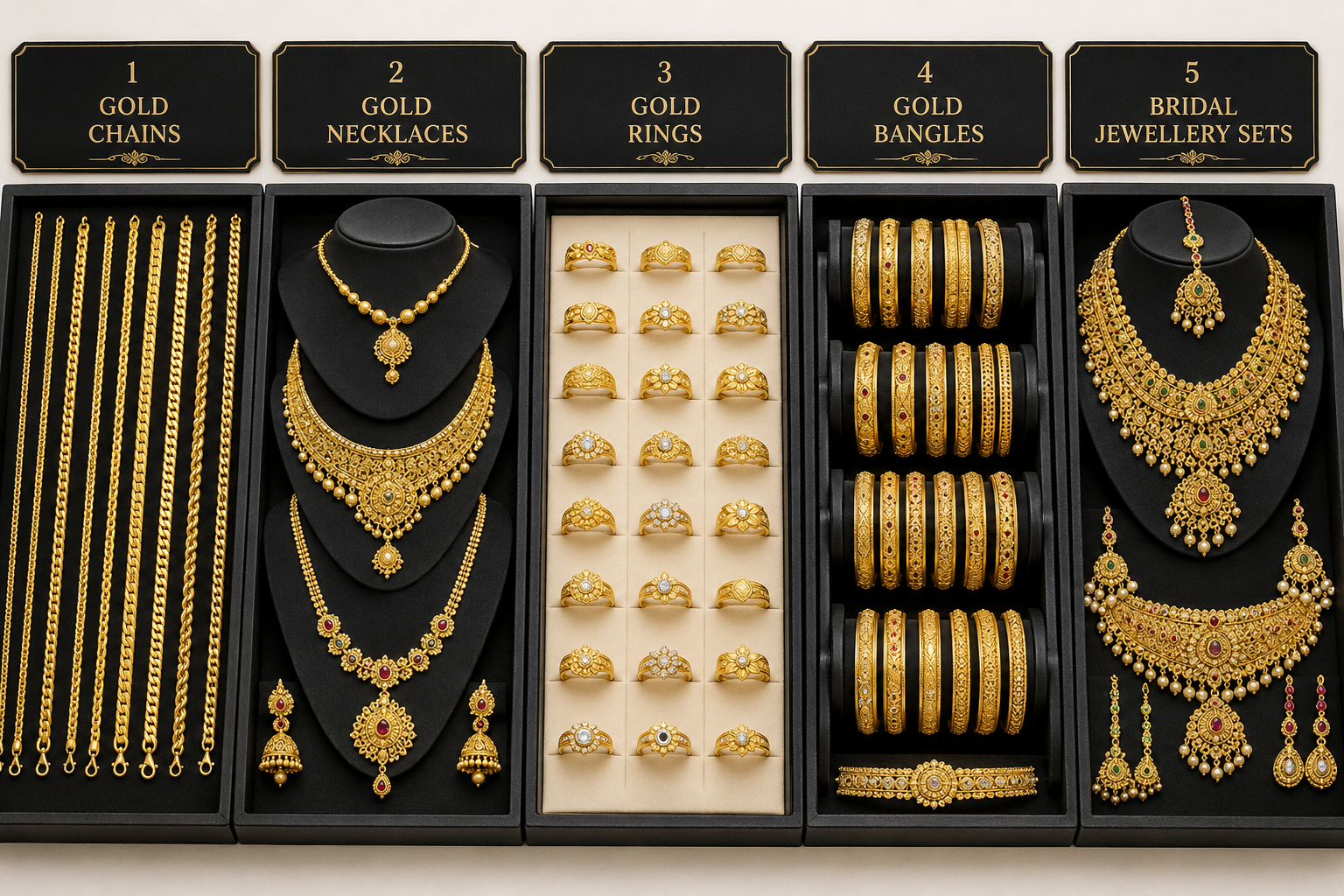
Successful sourcing begins with detailed product planning.
The more clearly buyers define their requirements, the easier it becomes for manufacturers to provide accurate quotations, realistic production schedules, and suitable recommendations.
Chains
Chains remain one of the most consistently demanded wholesale jewellery categories worldwide.
Buyers should specify:
- Chain style
- Length options
- Gold purity
- Weight ranges
- Target market preferences
Popular chain categories may include cable chains, rope chains, curb chains, and box chains.
Necklaces
Necklace collections often vary significantly between regions and consumer demographics.
Retailers should define:
- Design preferences
- Pendant styles
- Weight categories
- Fashion or luxury positioning
- Packaging requirements
Understanding end-customer preferences helps manufacturers recommend suitable collections.
Rings
Ring manufacturing requires detailed specifications.
Important considerations include:
- Ring sizes
- Design styles
- Stone settings
- Finish options
- Market positioning
Precise requirements help reduce production errors and improve consistency.
Bangles
Bangles are particularly popular across numerous international markets.
Buyers should define:
- Diameter ranges
- Weight categories
- Plain or stone-set designs
- Finish preferences
- Regional style requirements
Different markets often demonstrate distinct preferences for bangle styles and weight profiles.
Bridal Collections
Bridal jewellery frequently represents a high-value product category.
Manufacturers may offer:
- Matching bridal sets
- Wedding bands
- Engagement rings
- Traditional bridal collections
- Custom bridal designs
Providing comprehensive product requirements at the outset creates a stronger foundation for the sourcing process.
Once product specifications are established, buyers can begin engaging potential manufacturing partners.
Step 2: Request Quotations and Product Catalogues
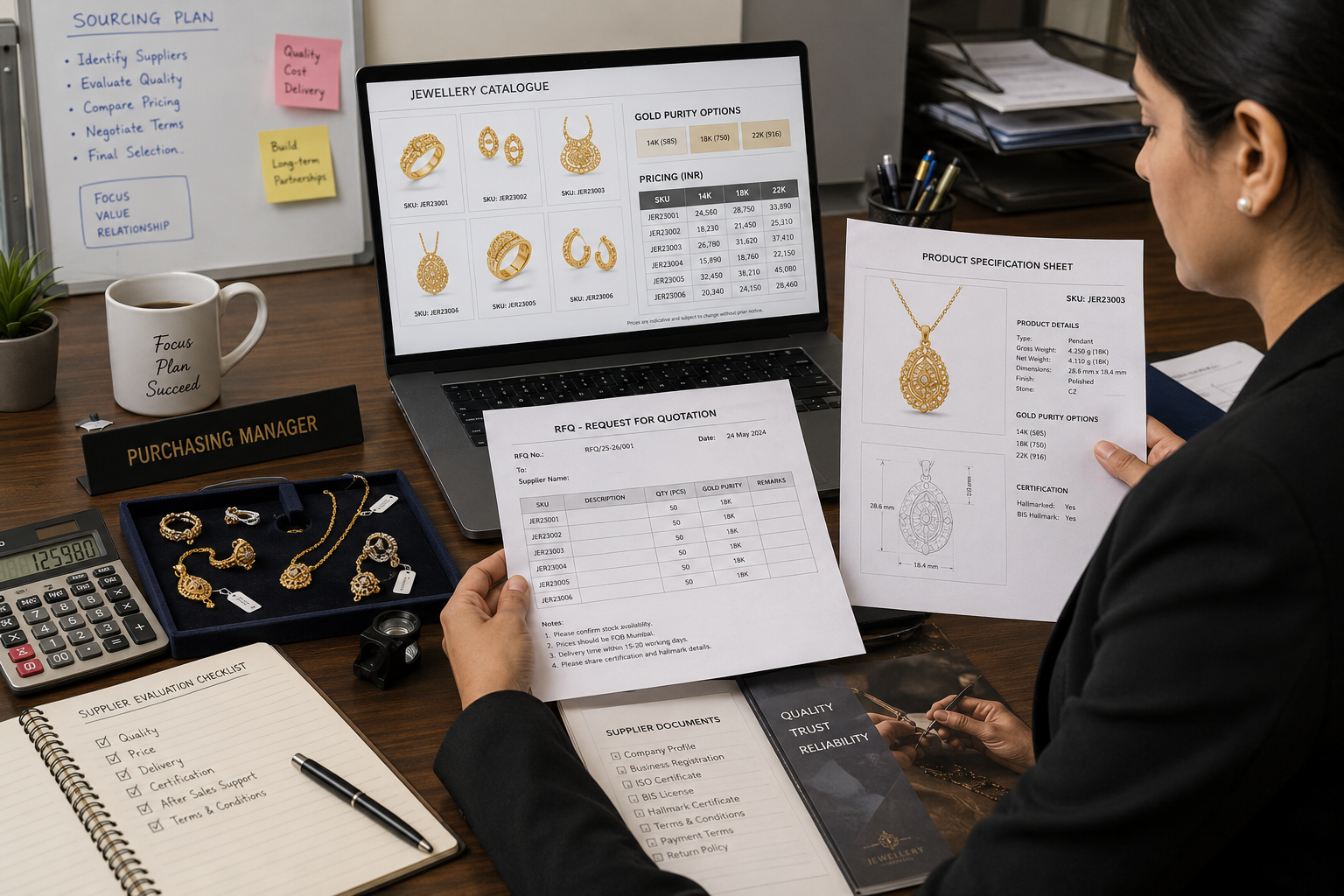
After defining product requirements, buyers should request detailed information from shortlisted suppliers.
This stage helps compare capabilities, pricing structures, and manufacturing suitability.
RFQ (Request for Quotation)
An effective RFQ should include:
- Product descriptions
- Estimated order quantities
- Gold purity requirements
- Design references
- Target delivery dates
- Packaging specifications
The more information provided, the more accurate the quotation will be.
Product Lists
Most established manufacturers maintain extensive catalogues.
These may include:
- Existing collections
- Best-selling products
- Seasonal designs
- Export-focused collections
- Newly launched products
Reviewing catalogues often helps buyers identify opportunities that may not have been initially considered.
Pricing
Pricing structures typically depend on factors such as:
- Gold market rates
- Product complexity
- Labour costs
- Stone usage
- Order volume
- Packaging requirements
When comparing quotations, buyers should evaluate total value rather than focusing solely on the lowest price.
Buying Direct from a Factory vs. Buying Through a Trader
At this stage, one of the most important considerations emerges: MOQ and production planning.
Step 3: Understand MOQ and Production Lead Time
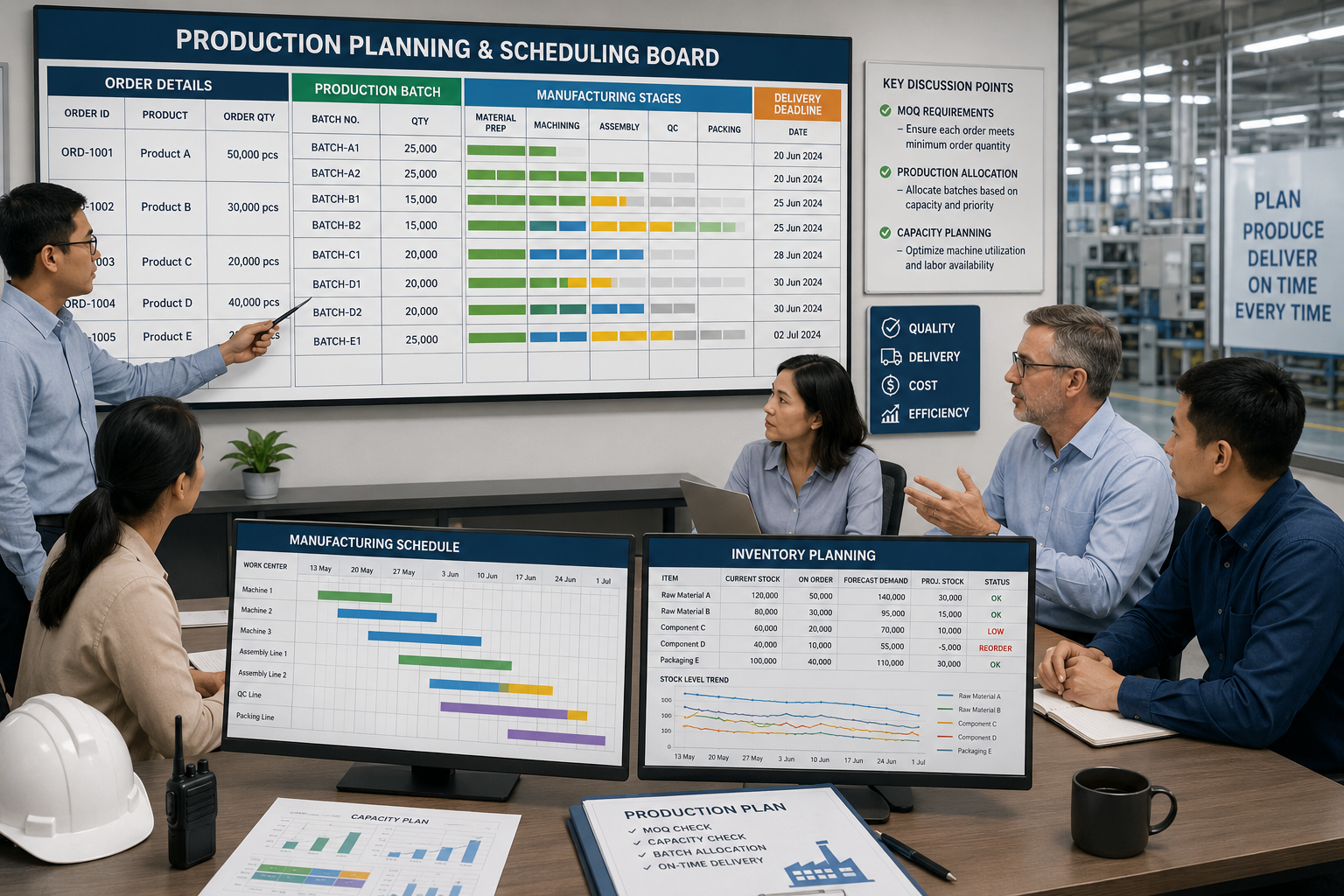
Among all aspects of international jewellery sourcing, understanding MOQ requirements and production lead times is arguably the most critical.
Many sourcing challenges originate from misunderstandings regarding minimum order quantities.
What Is MOQ?
MOQ stands for Minimum Order Quantity.
It represents the smallest order size a manufacturer is willing to produce under standard production conditions.
Factories establish MOQs to ensure production efficiency, resource allocation, and cost effectiveness.
Why Factories Use MOQs
Manufacturing involves setup costs regardless of order size.
These costs may include:
- Design preparation
- Mould development
- Production scheduling
- Material procurement
- Quality inspections
- Packaging preparation
Without MOQs, production costs can become disproportionately high.
MOQ Variations
MOQ requirements often vary depending on:
- Product category
- Design complexity
- Gold purity
- Customisation requirements
- Stone settings
- Manufacturing processes
For example, standard catalogue items may have lower MOQs than fully customised collections.
Understanding Production Lead Times
Lead time refers to the period between order confirmation and production completion.
Factors affecting lead times include:
- Order size
- Product complexity
- Factory workload
- Material availability
- Customisation requirements
- Seasonal demand fluctuations
Typical Production Planning Considerations
Buyers should discuss:
- Production capacity
- Scheduling flexibility
- Peak-season demand
- Repeat order capabilities
- Urgent production options
Clear communication regarding lead times helps retailers align inventory planning with sales cycles.
Why MOQ Discussions Should Happen Early
Many buyers make the mistake of reviewing products extensively before discovering MOQ requirements that do not fit their business model.
Early discussions help determine:
- Feasibility
- Budget alignment
- Inventory requirements
- Production suitability
- Growth potential
A strong understanding of MOQ and lead time expectations reduces operational risks and establishes realistic project timelines.
Before final production approval, however, buyers should carefully review samples and technical specifications.
Step 4: Review Samples and Production Specifications
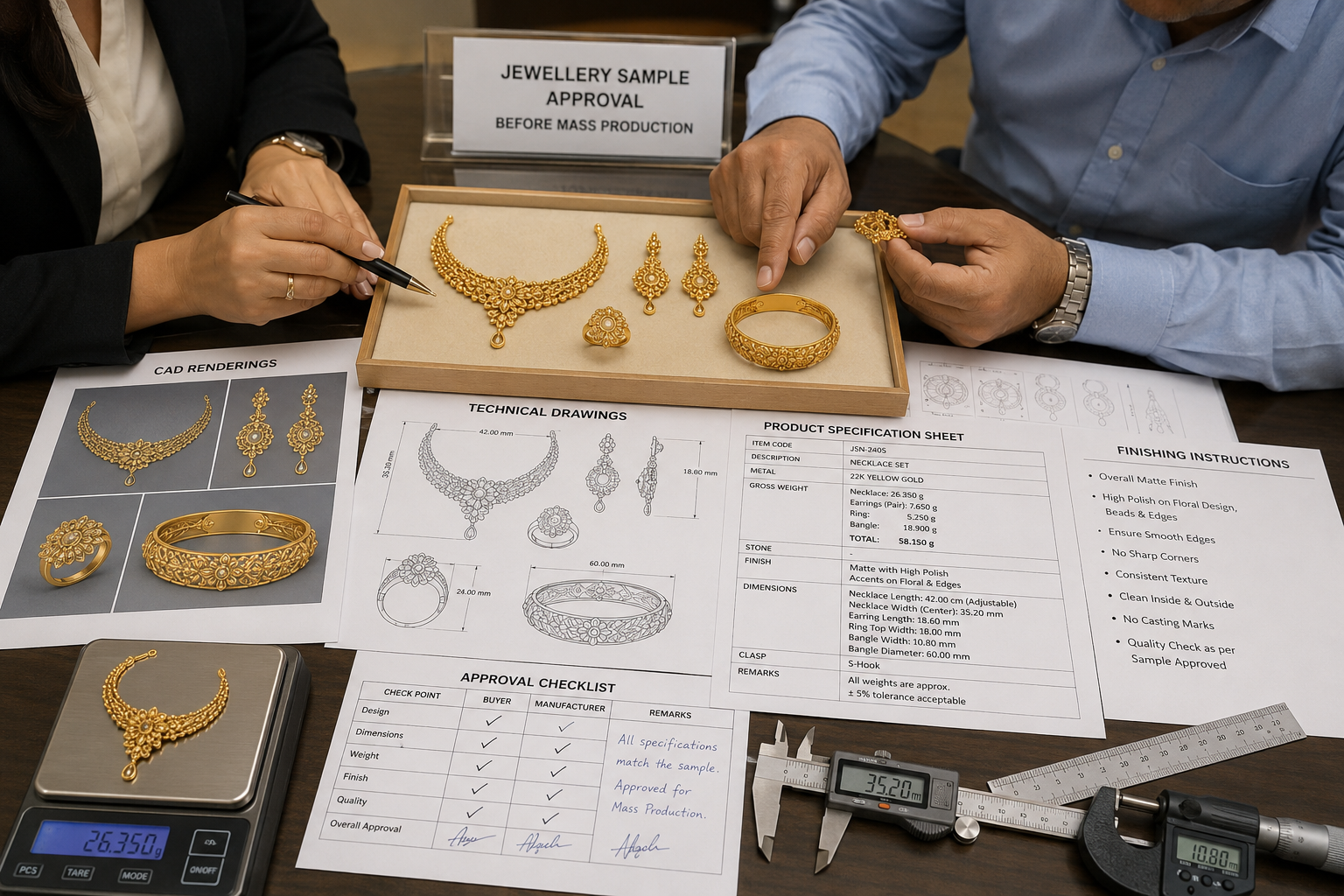
Sample evaluation is an essential stage in wholesale jewellery procurement.
Even experienced buyers should avoid proceeding directly to mass production without sample verification.
Sample reviews help confirm:
- Design accuracy
- Finish quality
- Weight specifications
- Stone placement
- Manufacturing consistency
- Packaging standards
Production specifications should also be documented clearly.
These may include:
- Product dimensions
- Gold purity
- Surface finishes
- Tolerance ranges
- Hallmark requirements
- Branding specifications
Written approvals reduce the risk of misunderstandings during production.
Once samples are approved, manufacturing can begin with greater confidence.
Step 5: Manufacturing and Quality Control
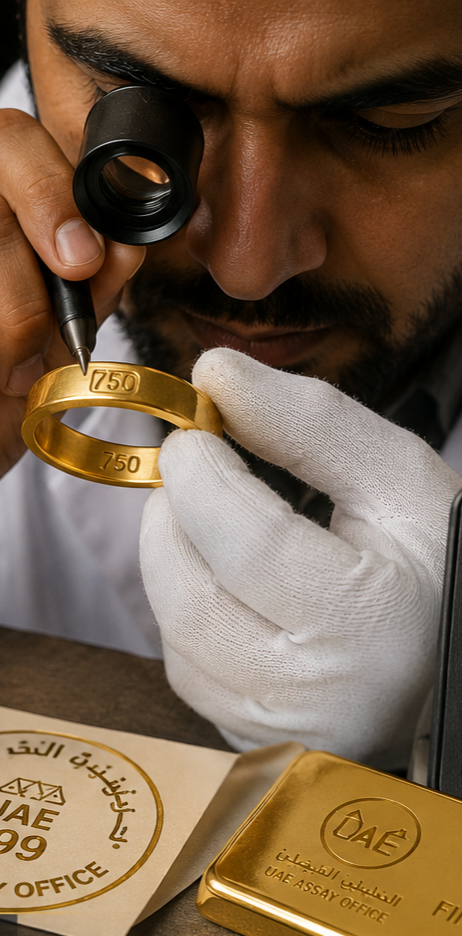
Effective quality management is one of the key factors that distinguishes reliable factories from less experienced suppliers.
Professional manufacturers implement structured systems designed to maintain consistency throughout production.
Production Workflow
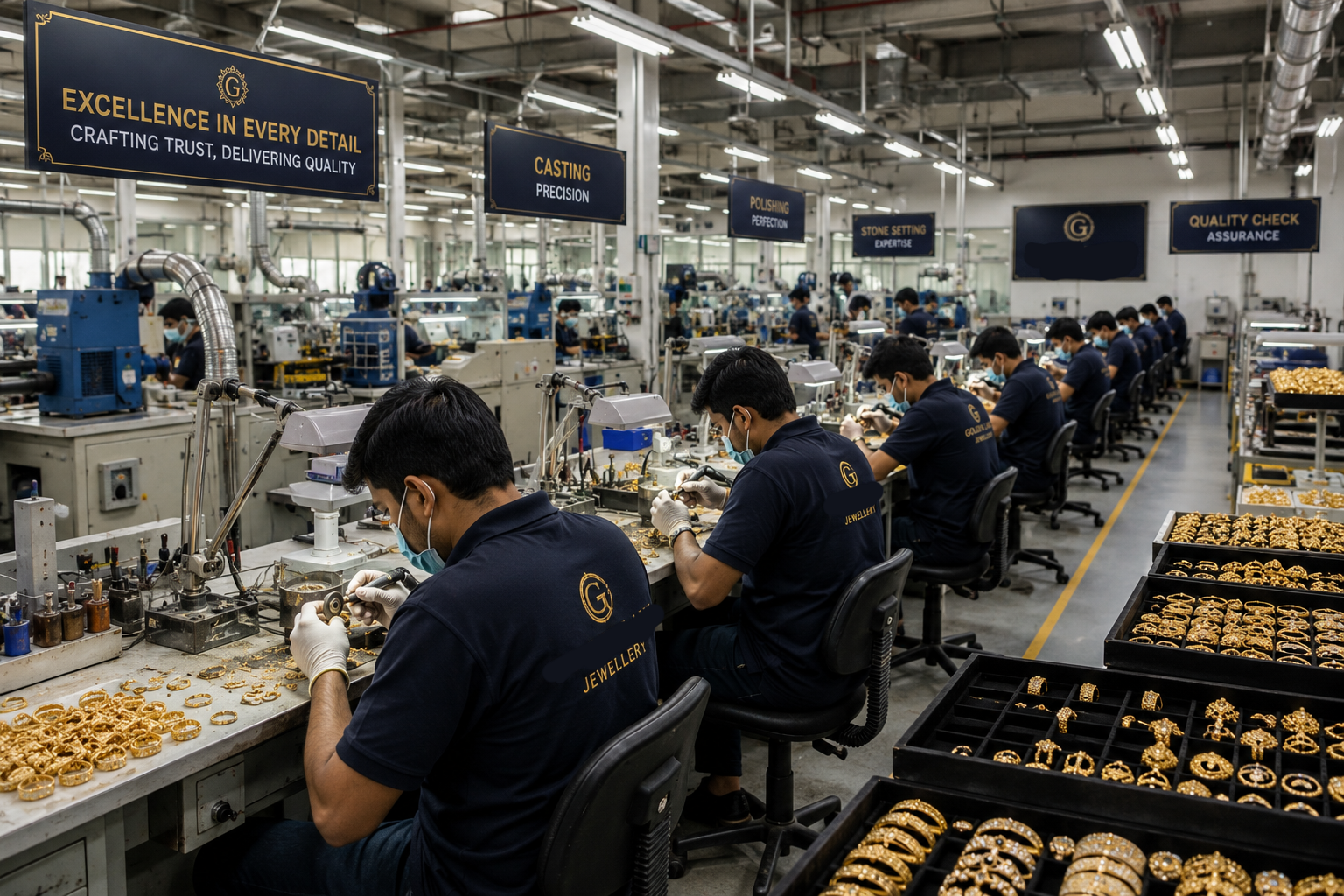
Although workflows vary between factories, common stages include:
- Design verification
- Material preparation
- Casting or fabrication
- Assembly
- Stone setting
- Polishing
- Finishing
- Inspection
- Packaging
Each stage contributes to the overall quality of the final product.
Batch Control
Batch management is particularly important for large-volume orders.
Factories often track:
- Production lots
- Material usage
- Manufacturing dates
- Inspection records
- Quality outcomes
Batch control improves traceability and consistency.
Quality Checks
Quality inspections may occur at multiple stages.
Typical checks include:
- Visual inspections
- Weight verification
- Dimensional accuracy
- Stone security assessments
- Finish evaluation
- Functional testing
These procedures help identify issues before products reach customers.
Hallmark Verification
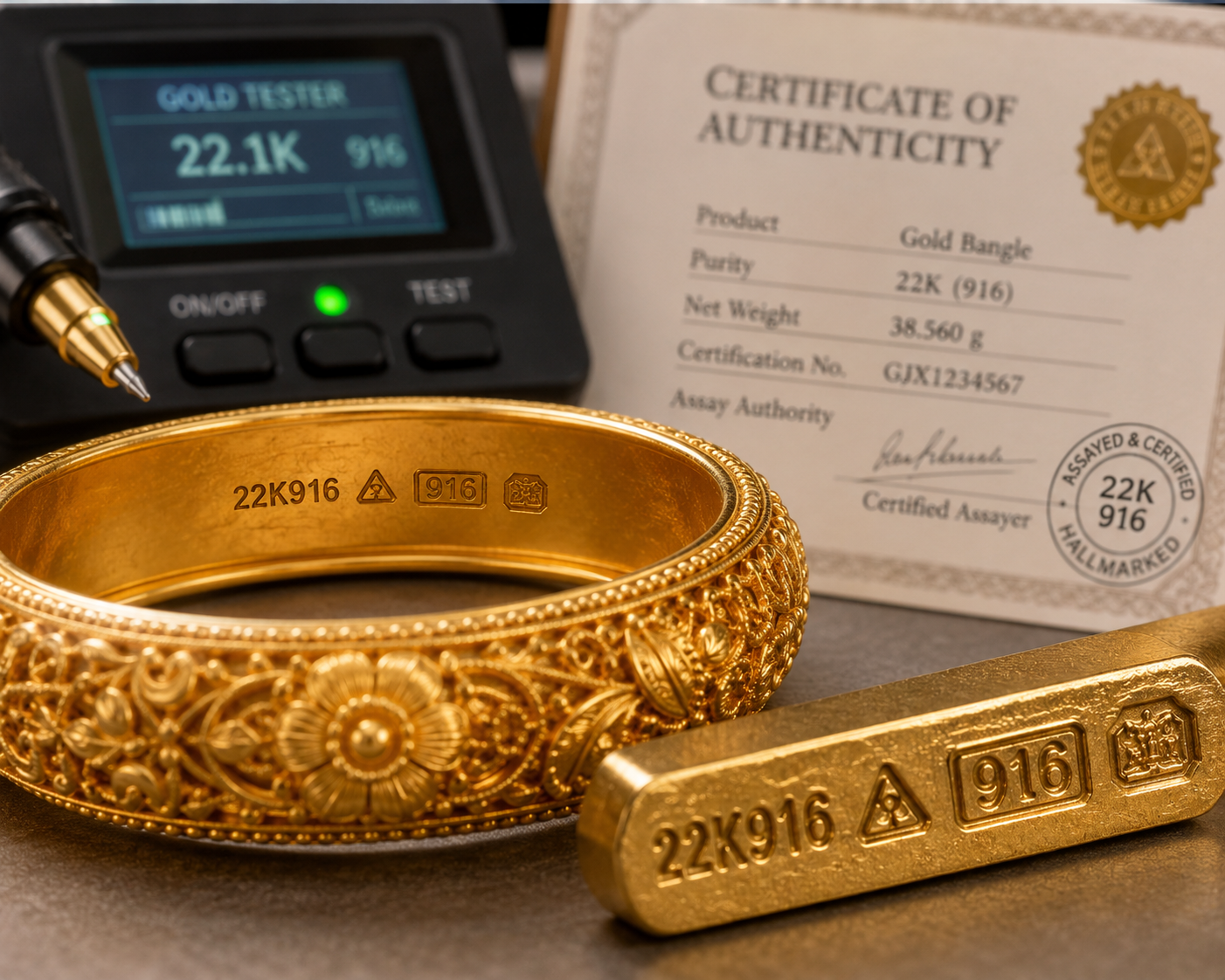
Gold purity verification remains essential for international trade.
Reputable manufacturers generally implement procedures to confirm:
- Gold fineness
- Hallmark compliance
- Regulatory requirements
- Market-specific standards
Hallmark verification helps protect both retailers and end consumers while supporting confidence in product authenticity.
Following successful production, attention shifts towards export preparation and international logistics.
Step 6: Export Documentation and Shipping
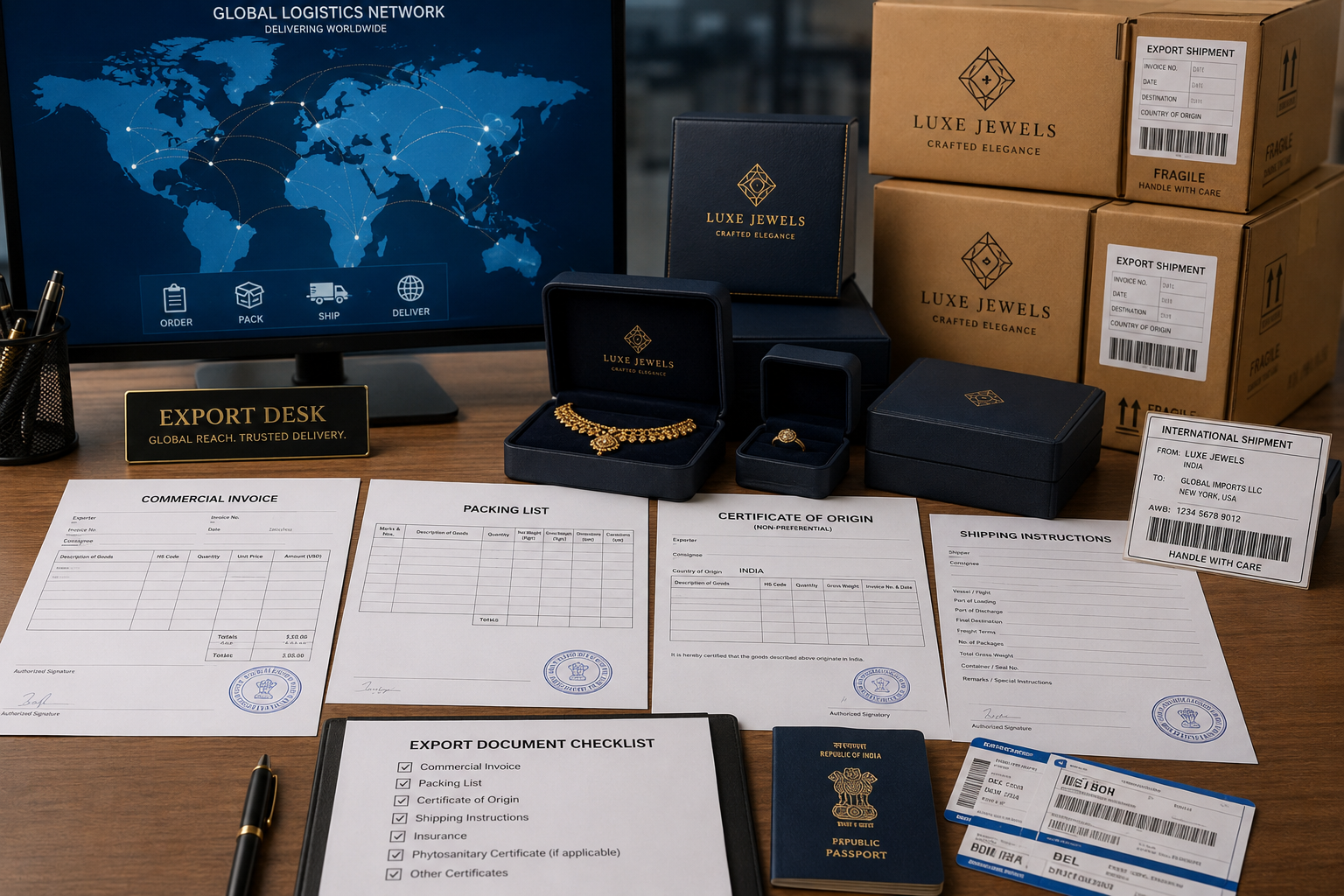
International trade requires accurate documentation and coordinated shipping procedures.
Professional exporters typically maintain dedicated systems to support overseas buyers.
Commercial Invoice
The commercial invoice serves as a primary export document.
It generally contains:
- Buyer information
- Seller information
- Product descriptions
- Quantities
- Values
- Payment terms
Customs authorities frequently rely on this document during import processing.
Certificate of Origin
Certain markets may require a Certificate of Origin.
This document confirms the country from which goods are exported and may influence customs procedures or tariff treatment.
Export Documents
Additional export documentation may include:
- Packing lists
- Airway bills
- Shipping instructions
- Customs declarations
- Insurance documents
Requirements vary depending on destination country regulations.
Shipping Methods
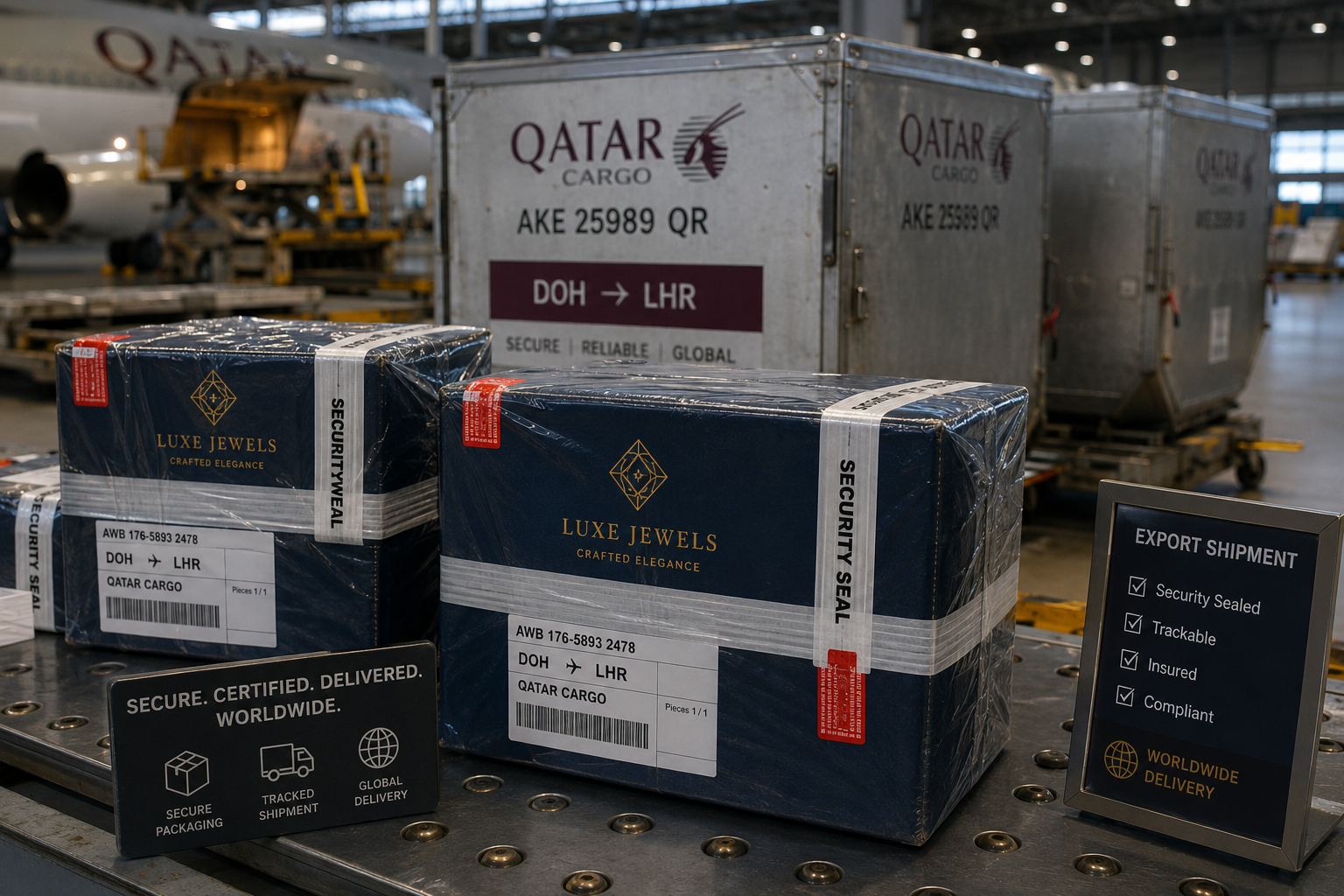
Common international shipping methods include:
Air Freight
Advantages:
- Faster delivery
- Greater security
- Suitable for high-value shipments
Courier Services
Advantages:
- Door-to-door convenience
- Shipment tracking
- Faster customs handling
Secure Logistics Providers
Advantages:
- Enhanced security
- Specialised handling
- International jewellery
- transport expertise
Selecting the appropriate shipping method depends on shipment value, urgency, and destination requirements.
Despite careful planning, buyers occasionally encounter avoidable sourcing mistakes.
Common Mistakes International Buyers Make
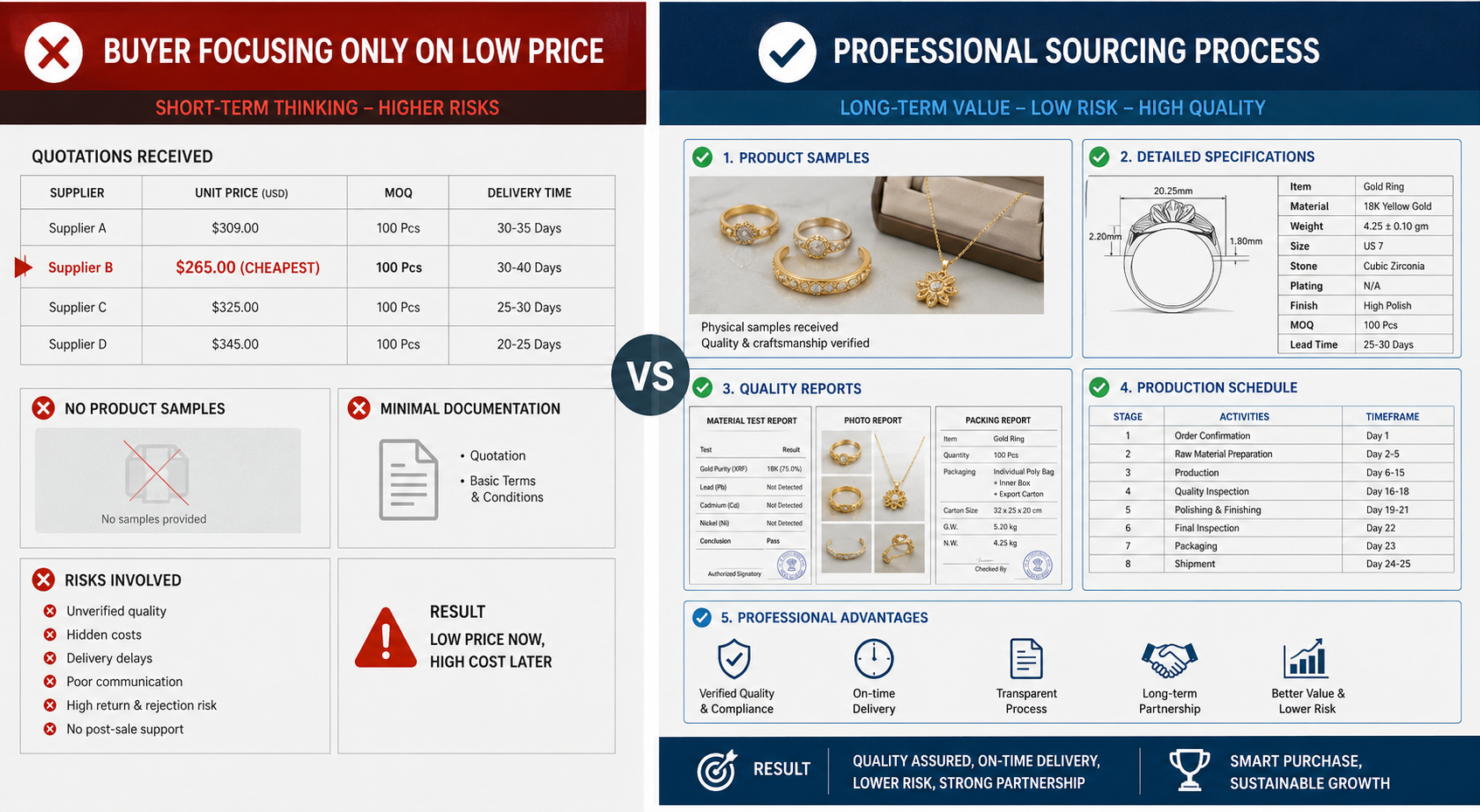
Understanding common sourcing errors can significantly improve purchasing outcomes.
Mistake 1: Choosing Suppliers Based Only on Price
The lowest quotation is not always the best option.
Buyers should also evaluate:
- Manufacturing capabilities
- Quality systems
- Export experience
- Communication standards
- Production reliability
A slightly higher price may deliver greater long-term value.
Mistake 2: Ignoring MOQ Requirements
Failure to understand MOQ policies can disrupt planning and budgeting.
Buyers should clarify MOQ expectations before progressing too far into negotiations.
Mistake 3: Skipping Sample Approvals
Proceeding directly to mass production increases risk.
Samples provide an opportunity to verify specifications before substantial investment occurs.
Mistake 4: Failing to Verify Quality Control
Quality control processes should never be assumed.
Buyers should request information regarding inspections, testing procedures, and batch management systems.
Avoiding these common mistakes creates a stronger foundation for long-term sourcing success.
For buyers seeking sustainable growth, building lasting factory relationships becomes equally important.
How to Build Long-Term Factory Relationships
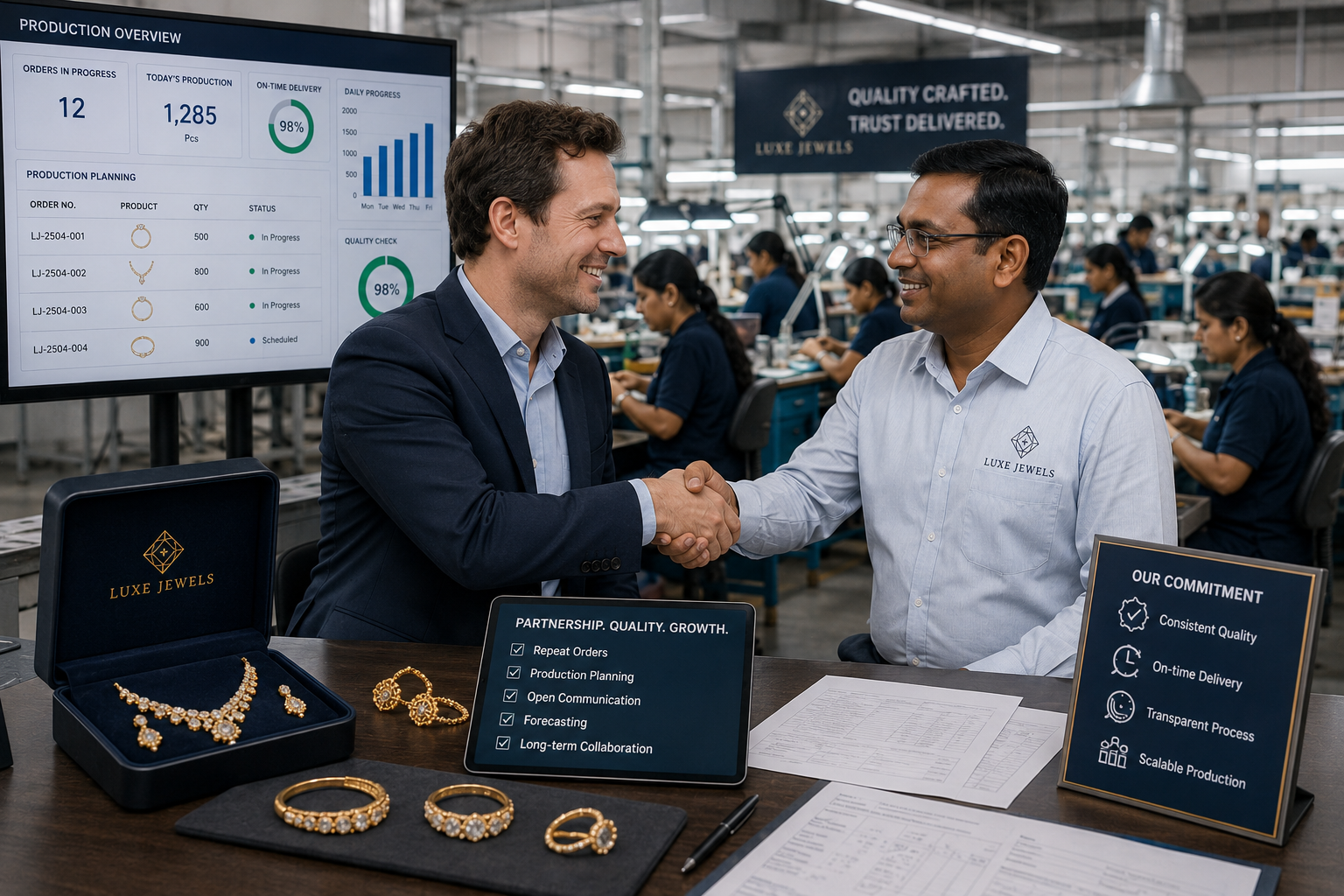
Successful jewellery sourcing rarely depends on a single transaction.
The most profitable partnerships often develop through long-term collaboration between retailers and manufacturers.
Repeat Orders
Consistent ordering patterns provide benefits for both parties.
Factories gain production stability, while buyers often benefit from:
- Improved scheduling
- Greater operational familiarity
- More efficient communication
- Stronger commercial
- relationships
Repeat business frequently creates opportunities for enhanced collaboration.
Production Planning
Long-term buyers typically share projected purchasing schedules.
Advance planning helps factories:
- Allocate resources
- Secure materials
- Optimise production capacity
- Improve delivery performance
Effective planning reduces uncertainty throughout the supply chain.
Communication
Clear communication remains one of the most important elements of successful sourcing.
Buyers should establish:
- Regular contact schedules
- Approval procedures
- Escalation processes
- Documentation standards
Strong communication helps minimise misunderstandings and improve responsiveness.
Forecasting
Forecast sharing allows manufacturers to prepare for future demand.
Benefits may include:
- Improved production readiness
- Better inventory management
- Reduced lead-time pressures
- Greater supply chain stability
Forecasting transforms supplier relationships into strategic manufacturing partnerships.
For businesses seeking reliable international jewellery sourcing Dubai offers, long-term collaboration often generates greater value than continually switching suppliers.
Many established retailers eventually view their manufacturing partners as extensions of their own operations.
Companies such as Golden Lake, which focus on long-term manufacturing partnerships, production consistency, and export support, illustrate the type of collaborative approach many international buyers seek when sourcing from Dubai.
FAQ

Can international buyers order directly from Dubai gold factories?
Yes. Many manufacturers work directly with overseas retailers, distributors, jewellery brands, and importers. Direct sourcing can provide greater transparency, improved communication, and more competitive pricing.
What is the typical MOQ for wholesale gold jewellery?
MOQ requirements vary depending on product type, design complexity, and manufacturing processes. Standard catalogue products may have lower MOQs, while customised collections often require larger minimum quantities.
How long does production usually take?
Production timelines depend on order volume, product complexity, material availability, and factory workload. Lead times should always be confirmed before placing an order.
Can factories produce private label jewellery?
Yes. Many manufacturers offer private label services that allow retailers to sell products under their own brand identity, packaging, and design specifications.
What export documents are required?
Common documents include commercial invoices, packing lists, certificates of origin, shipping documentation, and customs-related paperwork. Requirements vary by destination country.
How are gold purity standards verified?
Professional manufacturers generally implement gold purity verification procedures and hallmark checks to ensure compliance with applicable standards and customer specifications.
How can international buyers verify the reliability of a Dubai gold jewellery manufacturer?
International buyers can evaluate a manufacturer's reliability by reviewing its production capabilities, export experience, quality control procedures, certifications, product samples, and client references. Requesting sample orders, conducting virtual or in-person factory visits, and discussing production processes in detail can also help buyers assess whether a supplier is suitable for long-term wholesale partnerships.
What gold purity options are commonly available from Dubai gold factories?
Most Dubai gold factories manufacture jewellery in a variety of gold purities to meet different market requirements. Common options include 18K, 21K, 22K, and 24K gold, although availability may vary depending on the product type and destination market. Buyers should specify their required gold purity during the quotation stage to ensure accurate pricing and production planning.
Conclusion
Placing bulk orders with Dubai gold factories involves far more than simply selecting products and negotiating prices. Successful sourcing requires careful planning, detailed specifications, realistic MOQ expectations, rigorous quality control, and efficient export coordination.
For international retailers seeking to buy wholesale gold jewellery from manufacturer partners, Dubai offers a mature manufacturing ecosystem supported by export expertise, production capacity, and global trade connectivity.
By understanding each stage of the process—from product definition and quotations to manufacturing, documentation, and long-term partnership development—buyers can build more reliable supply chains and position their businesses for sustainable growth.
Whether sourcing catalogue collections, private label products, or customised designs, working with an experienced gold jewellery manufacturer Dubai exporters trust can help businesses navigate international procurement with greater confidence and efficiency.